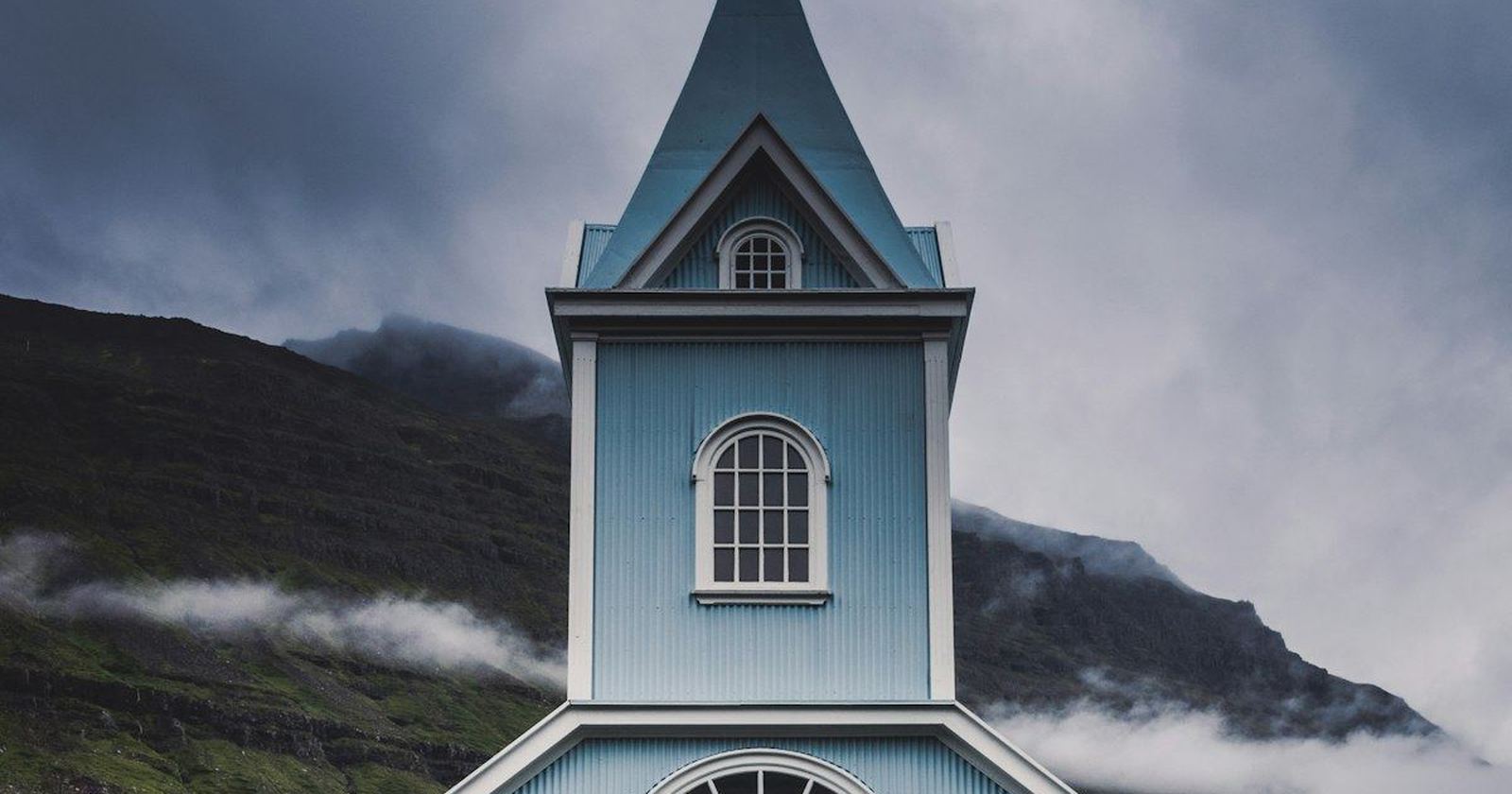
What a baptism website is
A custom baptism website is a single private page that holds the ceremony details, the godparent introductions, the reception information, the RSVP, and, once the day is over, a quiet album of the photos. One link. Sent to the guest list. Not indexed by search engines. Not scrolled past by strangers.
Baptism is a tender moment. In most families the honoree is a baby, sometimes only a few weeks old; in others, a teenager or adult professing faith for the first time. Either way, this is not the kind of event that belongs on a template builder's public feed, next to somebody's engagement countdown and somebody else's stag weekend. It needs a different tone, and it needs a different privacy posture.
That's what we build. A page that opens with the child's name and the date, walks the guest through the church, names the godparents with warmth, points to the reception, and closes with a form the family can actually rely on. If relatives are travelling from abroad, the site gives them what a card never could: maps, hotel notes, dress code, and, later, the video of the moment they couldn't attend in person.
Template builders assume public by default; we do the opposite. Your family's photos, your child's face, your godparents' names, the address of the church: nothing sits on the open web unless you decide it should.
What it's called across traditions
The same sacrament goes by different names in different rooms. The website uses the word your family uses.
- Baptism
- The universal Christian sacrament, from the Greek baptizein, "to immerse." Used across Catholic, Orthodox, Anglican, and Protestant traditions, and the most common term in the United States.
- Christening
- British and Anglican usage, often emphasizing the naming of the child that traditionally accompanied the sacrament. Common in the UK, Ireland, and Australia, especially for infant ceremonies.
- Chrismation
- Orthodox usage: in Eastern Orthodox and Eastern Catholic traditions, chrismation (anointing with holy oil) follows infant baptism directly in a single continuous rite.
- Adult baptism, believer's baptism
- Baptist, Pentecostal, and many Evangelical traditions: the candidate is old enough to profess faith personally, and the ceremony is typically full immersion.
- Dedication
- Some Evangelical and non-denominational churches: a non-sacramental baby dedication in which parents commit to raising the child in the faith, without water baptism.
- Naming ceremony
- Secular or interfaith families: a warm, non-religious welcoming with "guide parents" or "mentors" in place of godparents.
Digithad builds sites for all six with the same care. Same craft, different language, different sacred details.
What to include on the site
A baptism site is short by design, but every section earns its place. Here is the checklist, in the order guests scan for it:
- The child's name (or the adult candidate's name), big and warm at the top of the page.
- The date and start time, plus how long the service usually runs.
- The church or venue, with a map and one-tap directions.
- The presiding minister, named simply: Father, Reverend, Pastor, or Priest, as your tradition uses.
- The godparents named, with a short paragraph each. This is the section families thank us for most; guests actually read it. See our full guide to choosing and introducing godparents.
- What kind of ceremony to expect, in one or two friendly paragraphs: infant baptism, chrismation, full immersion, dedication, naming.
- Dress code, spelled out in one sentence per event. "Sunday best" means different things to different guests.
- Reception details: address, time, whether children are welcome, whether it flows straight from the church.
- RSVP, with a headcount, allergies, and a gentle nudge if guests are staying for the reception.
- Gift information: many families prefer donations to a charity in the child's name, or a savings bond, or nothing at all. Say so kindly.
- Hotel suggestions if guests are travelling.
Denomination navigation
The site adapts to your tradition. Not just the words: the tone, the order of the sections, and the shape of the ceremony explanation for guests who've never attended one.
Roman Catholic
Infant baptism is typically at two to six months, celebrated in the parish church, sometimes as part of a Sunday Mass and sometimes on a Saturday afternoon. Canon law asks for at least one godparent, a confirmed Catholic in good standing; families often choose two, one of each sex. The site names them properly, notes the parish's requirements, and can carry a paragraph on the traditional godparent gift (a cross, a rosary, a piece of family jewellery kept for the day).
Orthodox
Infant baptism and chrismation are performed together in one long, luminous rite: three immersions, the anointing with holy chrism, the tonsure, and the first communion. The godparent (called nono or nona in Greek families, kum or kuma in Slavic traditions) plays a central lifelong role. Your site can hold the full flow so guests know when to stand, when the child is submerged, and when to receive the newly baptized with applause.
Anglican and Episcopal
Often called a christening. Traditionally two or three godparents (godfathers for a boy, godmothers for a girl, plus one of the opposite sex). Many parishes include a renewal of baptismal vows for the whole family, which the site can introduce so guests aren't caught off guard. Prayer Book references sit gently at the bottom for those who like to follow along.
Protestant (mainline)
Presbyterian, Methodist, Lutheran, Reformed, and other mainline traditions baptize infants in a form close to the Catholic rite. Most do not require formal godparents, though many families invite "sponsors" who make promises alongside the parents. The site names them if you choose to have them, and quietly omits the section if you don't.
Baptist and believer's baptism
The candidate is old enough to profess faith personally: often a teenager, sometimes an adult. The ceremony is full immersion, often preceded by a short spoken testimony. Many families include that testimony (with the candidate's permission) as a written section on the site, so the guests who couldn't be present can still read it. There are no godparents; there is a candidate, a pastor, and a witnessing community.
Interfaith and secular
A dedication, a naming ceremony, or a warm welcoming without a religious frame. "Guide parents" or "mentors" replace godparents; a poem or a family reading replaces the liturgy. The site treats the day with the same care and the same beauty.
The website's role during Jordan pilgrimages
For families planning a baptism at the Jordan River, the website carries what a card cannot. Pilgrimage baptisms are a rising choice as the two-thousand-year window of Jesus's own baptism approaches (scholarly consensus places it between AD 28 and 30, based on Luke 3:1, which puts the window squarely on 2028 to 2030).
Both major sites are open to visitors and to sacramental use with proper coordination: Qasr al-Yahud on the Israeli side and Al-Maghtas, also known as Bethany Beyond the Jordan, on the Jordanian side, a UNESCO World Heritage site since 2015. Each has its own logistics: booking with the local church, dress code for immersion (a white baptismal robe is customary, and modesty layers underneath are wise), the season and river conditions, and the transfer from Jerusalem or Amman.
Your site can hold all of it: the pilgrimage itinerary, the live stream for relatives who couldn't travel, a short catechetical piece on what the river meant then and means now. For depth, see planning a baptism in the Jordan River and, for the anniversary framing, 2,000 years since the baptism of Jesus.
Timing
Most baptisms are scheduled two to four weeks after the parish confirms a date, which is why baptism families often come to us on a short runway. That's fine; the site can go live in about a week if it has to.
Our usual rhythm, when the calendar allows it:
- Six weeks before: save-the-date sent to the guest list, pointing at a placeholder that will become the full site.
- Three to four weeks before: the site goes live with all details, RSVP opens, hotel suggestions publish.
- One week before: RSVP reminder to the stragglers.
- The week of: a gentle logistics reminder to every confirmed guest.
- After the day: the site becomes the album for the next twelve months.
If the parish only confirmed the date this morning and the baptism is in ten days, tell us. Digithad has built full sites in five working days for tight timelines. The design does not suffer; we've just done this often enough to move quickly.
Packages
Three packages, one-time prices, no subscription; the site stays online for a full year:
- Essential, $490. A one-page bespoke site: ceremony details, godparent introductions, RSVP, maps, and gift information. The right fit for an intimate parish baptism.
- Signature, $990. The choice most baptism families make: multi-section custom design, private photo gallery, digital save-the-date, and password protection.
- Prestige, $1,890. Fully bespoke art direction with live stream integration (essential for Jordan pilgrimages or when family abroad can't travel), a dedicated concierge until the day, and a longer post-event album period.
Full comparison on our pricing page. Your date is booked with a 50% deposit, invoiced securely, wherever you are in the world.
Every family present, every question answered.
Tell us about the baptism you're planning. We'll reply within 24 hours with a first sketch of the site.
Questions parents ask
How much does a baptism website cost?+
$490 to $1,890 at Digithad. Essential ($490) is a one-page bespoke site with the ceremony details, godparent introductions, RSVP, and maps. Signature ($990) adds a photo gallery, digital save-the-date, and password protection. Prestige ($1,890) is fully bespoke with live streaming for pilgrimage baptisms or family abroad. All one-time; the site stays online for a year and becomes a private album.
Is it a baptism or a christening?+
Both words describe the same sacrament. Baptism is the universal term for the Christian rite; christening is a British and Anglican word emphasizing the naming aspect that traditionally accompanied it. In Ireland, Australia, and the UK, christening is more common in casual speech; baptism is the preferred term in most American Catholic and Orthodox settings. Your website uses whichever your family uses. Our dedicated guide has the full story.
Can the baptism website be kept private?+
Yes. Every Digithad site is hidden from search engines by default. You can add a password shared only with your guests. Photos of your child, addresses, and the ceremony video sit behind that layer, not on the open web. For a baptism, where the honoree is usually a very young child, this is the standard, not an upgrade.
Do you build sites for Orthodox baptisms, adult baptisms, and non-denominational dedications?+
Yes to all three. An Orthodox baptism with chrismation, an adult believer's baptism by immersion, a non-denominational dedication or naming ceremony: each gets its own design language and its own accurate description of what happens. We work with families across denominations and none.
What happens to the site after the baptism?+
It stays online for 12 months and becomes the private album: the professional photographer's set, the guest photos uploaded via the same link everyone already has, and the video if the ceremony was recorded. For families who baptized their child at the Jordan or during a pilgrimage, this is often the memory they revisit most.

We design celebration websites for families across the English-speaking world: baptisms, first communions, weddings, and bar and bat mitzvahs. Multilingual, private by default, one beautiful link for the days that matter most. Updated July 2026.