- The essentials block
- Service details and timing
- The parasha, explained
- What to expect for first-timers
- Party details, kindly
- The RSVP as a matrix
- Maps, parking and the walk
- Dress code, spelled out
- Accommodation for out-of-town family
- Countdown and playlist voting
- The photo wall
- Questions parents ask
If you're planning your son's celebration and you've landed here, you already know what you want: one link that answers every question, for every kind of guest, without a WhatsApp thread that reaches 400 messages by the RSVP deadline. Everything below is the checklist we've refined across dozens of families, in the order guests hunt for it on their phones. Use it as the spec for a custom bar mitzvah website, or as the outline for the copy you'll hand to a designer. Either way, this is what belongs on the page.
The essentials block: name, date, city, feeling
This is the top of the page, above everything else. Guests should see, in one glance, whose day it is, when it happens, where they need to be, and what feeling to bring. That's four pieces of information and one atmosphere. Keep the type large, keep the space generous, and resist the urge to explain anything up here. Any guest who taps the link before boarding a train should get the answer they came for in under two seconds. Everything else lives below.
"Ethan is becoming bar mitzvah. Saturday, 12 October, in Manchester. Come sing, come eat, come dance us into the next chapter."
Service details: synagogue, times, and when HIS part happens
List the synagogue name, the full address, the start time, and a target window for the Torah reading. That last detail is the one grandparents plan around, and it's the one every generic wedding-style builder forgets. A service can run two hours or three; the aliyah your son leads happens somewhere inside that stretch, and older guests want to time their arrival so they don't miss it. Give a window rather than a single minute, so nobody feels tricked when the rabbi runs long. Add the expected end time so the driver knows when to be outside. If there's a kiddush after the service, name it, and name where.
"Shabbat morning service at Whitefield Hebrew Congregation, 10 Coniston Avenue. Doors from 9:15 a.m. Service begins at 9:30. Ethan's Torah reading is expected between 11:15 and 11:45. Kiddush follows in the community hall."
The parasha, explained for every guest
Give the Torah portion two friendly paragraphs of its own. Half your guest list will be Jewish, familiar, and warmed by the mention. The other half will be curious, respectful, and quietly worried they'll look lost. Two paragraphs closes that gap: one that names the portion and situates it in the calendar, one that connects the story to your son and what he cared about while preparing. This is the section guests mention weeks later. It's also the section that turns a website into a keepsake.
If you want a full method for writing this section (including how to weave in your son's d'var Torah without spoiling it), see our companion guide to explaining the parasha on the website. Below is the introductory paragraph most families use as a starting point.
"A parasha is the weekly Torah portion, read aloud in the synagogue on Shabbat. There are 54 of them in the yearly cycle, and each bar mitzvah boy inherits the one that falls on his date. Ethan's portion is Lech Lecha, the story of Abraham setting out for a land he doesn't yet know. It's a portion about courage, and about trusting the road. If you've never heard it before, you're in the right place to hear it now."
What to expect: the section that changes everything for first-timers
Write this section for the guest who has never set foot in a synagogue. It's short, warm, and answers the questions they won't ask you at the door. Tell them the service is roughly two and a half hours and it's fine to arrive after the opening; tell them a kippah is offered at the entrance to men who'd like one, that wearing it is a sign of respect, and that nobody will mind either way if they'd rather not. Explain that guests stand when the ark is opened and when the congregation stands, and that following the person next to you is more than enough. Say phones stay away during the service because it's Shabbat, and no photography happens in the sanctuary. That last line, more than any other, saves someone's grandmother from a mortifying moment.
"First bar mitzvah? Welcome. The service lasts about two and a half hours; you're welcome to arrive any time after 9:30. Kippot are offered at the entrance for men who'd like one, and wearing one is simply a kind gesture of respect. Please stand when those around you stand. Phones stay in bags on Shabbat, and there's no photography during the service. Anything you're unsure about, ask the person next to you. They'll be delighted."
Party details, kindly
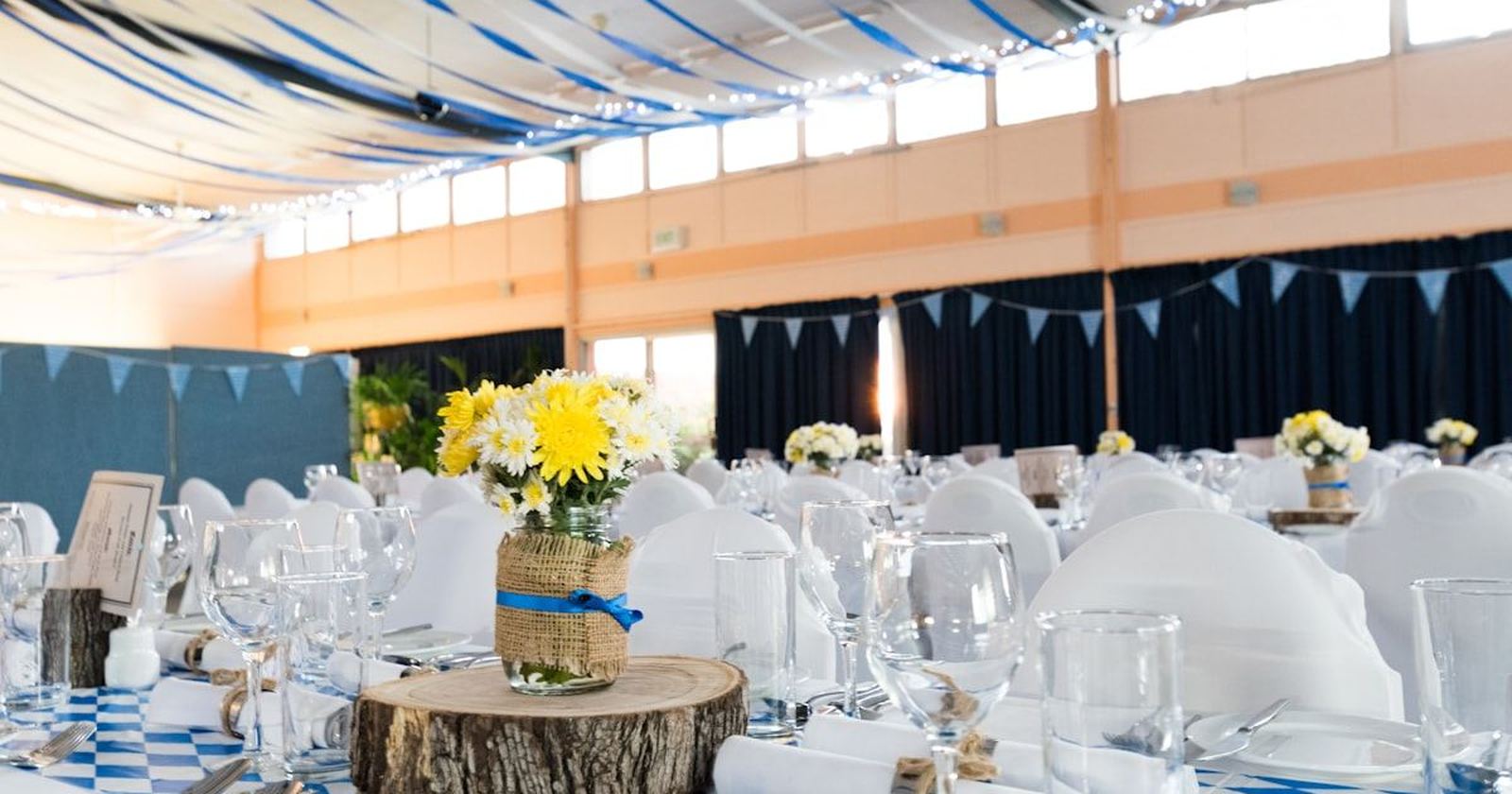
State the venue, the time the party begins, the theme if there is one, and, most importantly, who's invited to what. This last part deserves the plainest sentence on your entire site. An adults-only dinner, a teens-only party bus, a kids' zone with its own supervision: name each of these in one line so nobody arrives with a nine-year-old to a black-tie dinner or leaves a fourteen-year-old at home when they were welcome. Warm, direct language costs nothing and prevents the awkward text message you don't want to answer at 8 p.m. on the night.
"The evening reception, from 7 p.m. at The Old Granary, is adults-only. Teens are invited to Ethan's party from 8 p.m. at the same venue, with their own DJ, their own dance floor, and their own late-night snacks. Younger siblings and cousins are warmly invited to the earlier family lunch."
The RSVP: not one yes/no, but a matrix
A bar mitzvah RSVP is not one question. It's a small grid. Ask about the service and the party as separate yes/no answers, because plenty of guests attend one and not the other, and treating them as a single choice quietly loses you data. Then ask for the number of seats, the meal choice for each attending adult, the meal choice for each attending teen or child, and any allergies or dietary requirements written in the guest's own words. That last field catches the "gluten free but relaxed about it" nuance a checkbox can't. Set a clear deadline six weeks before the date and send automatic reminders at three weeks and one week; you'll save yourself the phone calls. For the full workflow, including how to chase the last twenty families without feeling like a nag, see our guide to bar mitzvah RSVP management.
Ask each guest, in order:
- Will you join us for the Shabbat morning service? Yes or no.
- Will you join us for the evening party? Yes or no.
- How many seats do you need at each?
- Meal choice for each attending adult (with veggie, fish, kosher-only, and allergy-friendly options).
- Anything we should know about allergies or diet, in your own words.
Maps, parking, and the walk between events
Every venue on your site gets a one-tap "open in maps" link. Not a static image, not a copyable address; a live link that opens the phone's default navigation app. Add a line on parking (where it's free, where it's paid, where it's a nightmare on Saturdays), and if the party follows the service directly, write a friendly note on the walking route between the two, with a rough time estimate. Guests who don't know the neighborhood will thank you for it, and the ones who do will still tap the link.
Dress code: spell it out in one warm sentence per event
"Synagogue-appropriate" means nothing to half of your guest list, and "smart-casual" means five different things depending on which continent the guest grew up on. Write one sentence per event, and picture the guest reading it on the bus. Say what covers the shoulders, whether jeans are welcome or not, and whether the party is a jacket-and-dress affair or a room where trainers are perfect. If your teens have a theme code, give them the code AND a plain-English translation for the parent buying the outfit.
"Synagogue: smart, comfortable clothes that cover shoulders and knees. Jackets welcome, jeans fine. Party: dress up if you love it, wear what makes you feel good if you don't. Teens: the code is neon accents, and yes, a white t-shirt with one bright piece counts."
Accommodation for out-of-town family
Two or three hotel suggestions, at three price points, all within a sensible distance of the synagogue and the party venue. Include walking or driving time to each, and a one-line note on which one your own family is staying at, if that's helpful. If any of your relatives keep Shabbat strictly, name the closest hotel that lets them walk to the service without carrying a room key that requires an electronic tap; a keyed lock or an arranged pickup at reception is worth mentioning here. It's a small kindness that turns into the difference between a weekend and a good weekend.
Countdown, playlist voting, and the small joys
A countdown at the top of the site sounds like a gimmick until you meet a thirteen-year-old checking it every morning. It's a small feature that turns a website into part of the anticipation, and it costs nothing. The other small joy: playlist voting. Let his friends suggest and upvote songs directly from their phones in the weeks before the party. You'll finish with a set list your DJ actually wants, and the teens arrive already invested in the night. The dance floor question answers itself.
The photo wall, after the day
The last section your site earns is the one nobody sees until Sunday morning. A photo wall, at the same link everyone already has, that fills up as guests upload from their phones. The professional gallery lands a few weeks later and slots into the same page. One link becomes the album, and it stays online for the full 12 months of your site. See our guide to bar mitzvah photo sharing for the workflow that keeps quality high without turning it into a moderation job. And remember: the invitation names the parasha, the website explains it. The card sets the tone, the site does the talking, and the photo wall closes the loop.
Turn this checklist into a beautiful site
A 15-minute discovery call, a design proposal within 72 hours, online in about a week.
Questions parents ask
What is the most important thing on a bar mitzvah website?+
The RSVP, split by event. Everything else is discoverable elsewhere with a phone call; a working RSVP for both the synagogue service and the evening party is what your caterer, your seating chart, and your peace of mind depend on. Every other section is service to that one.
Should the party and the service be on the same page?+
Yes, on the same site, with clearly separated sections and a split RSVP. Most guests attend both, some attend one or the other, and a single link is what your parents can pass to relatives without confusion. Two separate URLs invite mistakes.
What should we NOT put on a bar mitzvah website?+
Your home address. Photos of your child you wouldn't hand a stranger. A public gift registry that reads as expectation rather than option. Anything you'd regret being screenshotted. The site is private by default, but write as if it weren't, and let privacy be the extra layer.
How long should each section be on the site?+
Short. A sentence or two per block, with the exceptions being the parasha (two friendly paragraphs) and the 'what to expect' explainer (one short paragraph). Guests scan on their phones. Long paragraphs get skipped, and skipped information becomes a text message to you at 10 p.m.

We design celebration websites for families across the English-speaking world: bar and bat mitzvahs, weddings, brits and baptisms. Updated July 2026.