What a sweet 16 website does
A sweet 16 website holds the whole party in one private link: the date, the venue, the vibe, an RSVP that works properly on a phone, the dress code, the playlist, and after the night, the photos. In American and Canadian tradition, the sixteenth is the birthday that gets treated like an event rather than a dinner, usually somewhere between 50 and 150 guests, often with a budget and a guest list that would look right at home at a wedding.
Then comes the complication nobody warns you about. Most of your guest list is sixteen years old. Sixteen-year-olds do not open email. They will not fill in a form that asks for a postal address. They also don't own cars, don't book their own transport, and can't tell you whether a Saturday pickup at 11:30 p.m. works for their family. The people who can tell you that are their parents, and their parents were never sent the invitation.
A custom sweet 16 website solves the split by being two documents wearing one dress. The teenagers get the part they care about, and it looks like something they'd screenshot. Their parents get the part they care about, clearly labeled, one scroll or one tap away. You send the same link to everyone. Nobody has to be handled separately, and you stop running a call center for a party you're also paying for.
The two-audience problem, again
The two audiences want completely different things, and pretending otherwise is what makes a party site fail. Teenagers open a link to find out what the night is going to feel like. Is it a club thing or a garden thing. Who else is coming. What is she wearing, so I know what I can wear. Is there a song request box. They decide in about four seconds whether the page is embarrassing, and an embarrassing page doesn't get forwarded.
Their parents open the identical link with an entirely different list. Where exactly is this. What time does it end, in actual numbers, not "late". Will an adult be present the whole evening. Whose phone do I call if something happens. Is alcohol being served. Who is driving my daughter home.
Both lists are reasonable. Neither list belongs inside the other one's section. So we build them as two clearly separated blocks, each with its own heading, its own tone, and its own visual weight. The teen sections run loud and photographic. The parent section is calm, dense, and readable at a glance on a phone in the school pickup line.
And on the alcohol question: say it, either way, in one sentence, high up in the parent block. Parents of sixteen-year-olds are going to find out regardless. The version where they read it on your website beats the version where they text you at 9 p.m. on a Tuesday, and it beats the version where they hear a rumor from another parent.
Design directions that feel sixteen, not six
Sixteen has taste, and it's usually sharper than the party-supply aisle suggests. Pink with a tiara on it is a completely legitimate choice, and when she wants it we'll make it beautiful. But it is a choice, not a default, and plenty of the girls we design for want something else entirely. Three directions families keep coming back to.
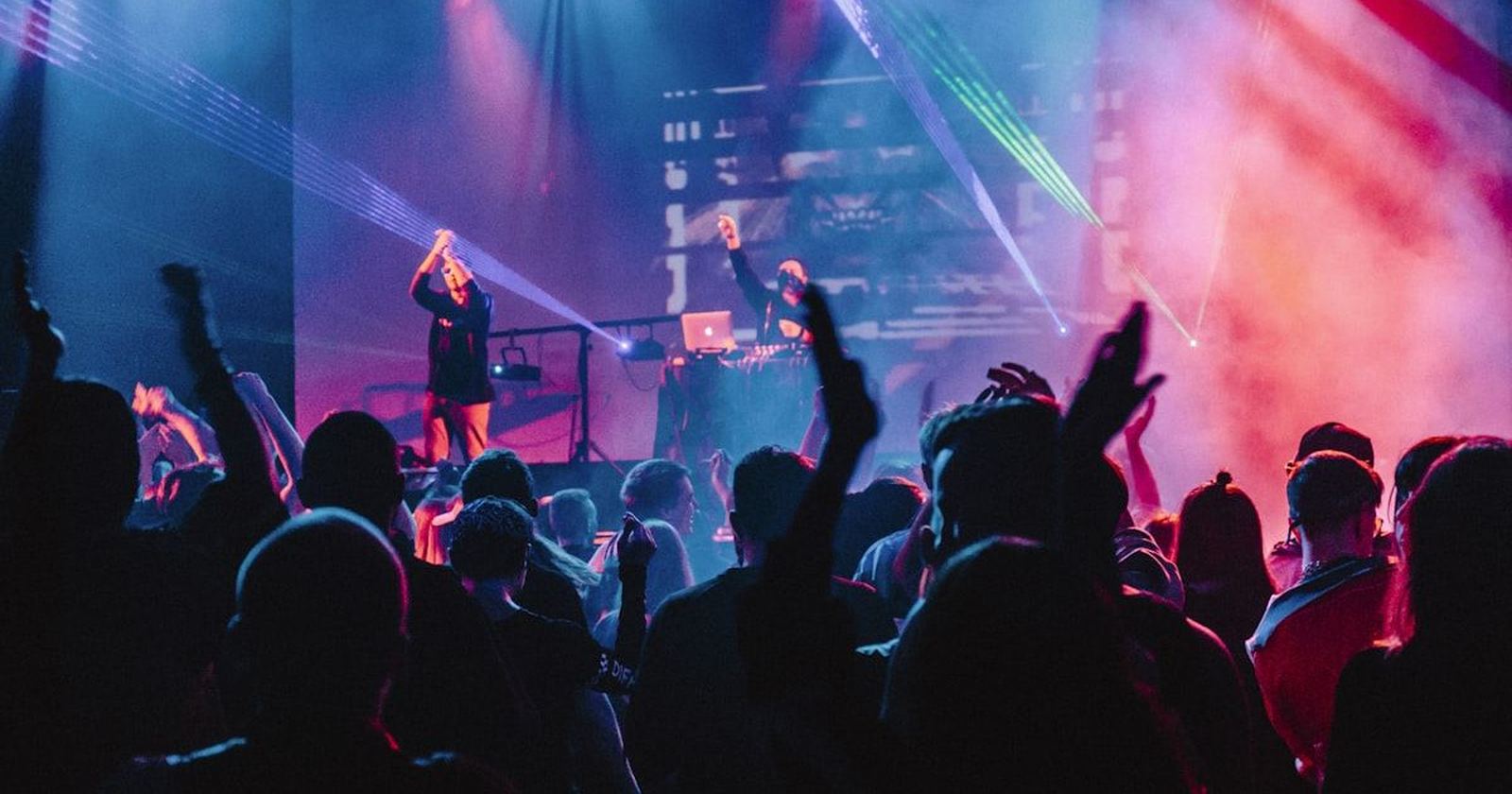
Electric violet and acid green on near-black, type set large and tight, a landing screen that moves as you scroll. The countdown glows. Photos get high-contrast treatment so phone snapshots look deliberate rather than accidental. The playlist section reads like a festival lineup with her name at the top of the bill. For a venue with a real sound system, a late end time, and a girl whose group chat is mostly concert plans.
Warm film grain, cream and terracotta, a soft serif that reads almost handwritten from across the room. Photos are square and slightly faded, as though the night already happened and somebody found the roll a year later. Sections stay short and generous, built to be screenshotted straight into a story. For a garden, a rooftop, a long table under string lights, and a girl who shoots on a disposable camera on purpose.
Black, white, and one thin rule between them. Her portrait full width on the landing screen, her name in small capitals underneath, nothing else competing. The RSVP is a single elegant column. The dress code section is laid out like a fashion editorial, which is exactly why teenagers follow it instead of arguing with it. For a black tie sixteenth, a hotel ballroom, or a girl who has firm opinions about photographers.
We start from her camera roll, the three songs she plays most, the two colors she wears constantly, and the one venue photo that made her say yes. That's a better brief than any theme catalog, and it's the reason her friends recognize the site as hers before they read a word of it.
The sections that actually get used
Five sections carry almost all the traffic. We'll happily build the decoration too, but these are the ones that change how the night actually goes.
- Playlist voting. Guests submit songs and upvote each other's picks. Your DJ gets a ranked list a week out instead of forty requests shouted at the booth at 10 p.m. It's also the single best reason a teenager will open the link at all. If the party is a surprise, the mechanics change completely; our guide to surprise party logistics covers the version where she can't see the page.
- RSVP with a parent contact field. Name, yes or no, dietary needs, and then the field that makes the whole thing function: a parent's name and mobile number. One form, one source of truth, every adult reachable.
- Dress code with real photographs. "Smart casual" means nine different outfits to sixteen different people. Three or four reference images settle it, and they settle the group chat about it too.
- Transport logistics. Drop-off point, pickup point, when the last shuttle leaves, and whether anyone is going anywhere afterward. Written for the person driving, not the person dancing.
- The photo wall. After the night, guests upload from their phones to the link they already have. You get the version of the evening the photographer never sees, and she gets it without any of it going public.
The parent section
Give the parents their own block, label it plainly, and put everything they need inside it. We usually title it "For parents" and place it right after the essentials, because treating it as a footnote just means forty people scroll past it and then message you individually. It is the least glamorous section on the site and the one that does the most work.
What belongs in it:
- The full venue address, one tap to maps, plus a line about what the building looks like from the street. Parents circling a dark industrial block at 11 p.m. do not enjoy the party.
- Start time and a genuine end time, in numbers. "Doors at 7:30, last song at 11:15, venue empty by 11:45."
- Who is supervising. Names, roles, how many adults, and whether the venue provides staff or security.
- A phone number that will be answered during the party. Not the host parent's phone if she'll be on the dance floor. Pick someone who will hear it ring.
- The alcohol line, in one unambiguous sentence.
- Pickup arrangements. Where cars wait, whether there's a shuttle, and what happens if somebody runs late.
- The practical medical note: first aid on site, and confirmation that the allergies collected in the RSVP went to the caterer.
It runs about a hundred and fifty words and it's the highest returning hundred and fifty words on the whole site. Parents who read it relax. Parents who relax say yes.
Sweet 16 vs quinceanera
They're not the same event and they're not interchangeable. A quinceanera happens at fifteen, is rooted in Latin American tradition, and usually carries a religious component: a Mass or a blessing, a court of honor, the changing of the shoes, the first dance with her father, and a padrino and madrina structure that draws the whole extended family into sponsoring the day. It's a rite of passage with a liturgy attached.
A sweet 16 is a milestone birthday party. It's North American, secular by default, and its shape is entirely up to the family. Some include a candle ceremony or a father-daughter dance; plenty skip both.
Both run at wedding scale for a lot of families, and both deserve a site built for the actual event rather than a wedding template with the nouns swapped. Where they differ most on the web is language and structure. A quinceanera site is frequently bilingual and needs a proper home for the padrinos; a sweet 16 site needs playlist voting and a parent logistics block. If you're choosing between them, or blending them, our full comparison of quinceanera and sweet 16 traditions walks through it properly.
Packages
Three packages, one-time prices, no subscription, and the site stays online for twelve months.
- Essential, $490. One page, bespoke design: RSVP, countdown, the essentials block, and the parent logistics section. Right for fifty guests at a restaurant.
- Signature, $990. What most sweet 16 families choose: multi-section custom design, playlist voting, photo gallery, digital save-the-date, and password protection so the page isn't findable by anyone she didn't invite.
- Prestige, $1,890. Fully bespoke art direction, custom motion, live streaming if grandparents are watching from another country, a seating tool, and a concierge who stays with you until the night itself.
Compare the full details on our pricing page. Her date is held with a 50% deposit, invoiced securely, wherever you are in the world.
She turns sixteen once. The website takes a week.
Tell us about her, the venue, and the two colors she wears constantly. We'll reply within 24 hours with ideas and a timeline.
Questions parents ask
What should be on a sweet 16 website?+
Two things in parallel: the party information for the teenagers (vibe, playlist voting, dress code, timing) and the logistics for their parents (address, end time, supervision, contact number, alcohol policy, pickup arrangements). Parents read the second section first. Getting both right is what makes the RSVPs come in quickly.
How much does a sweet 16 website cost?+
$490 to $1,890 at Digithad. Essential ($490) is a one-page bespoke site with RSVP, countdown, and the parent logistics block. Signature ($990) adds playlist voting, a photo gallery, digital save-the-date, and password protection. Prestige ($1,890) is fully bespoke. All one-time prices; the site stays online for a year.
How do you get teenagers to RSVP to a sweet 16?+
Route the actual confirmation through a parent contact so an adult signs off on transport and timing, but give the teenagers their own reason to open the site: playlist voting, a seat request, a question about what to serve at midnight. They answer the fun questions, and the logistics come along for the ride.
Should we mention whether alcohol is served?+
Yes, explicitly, either way. Parents of sixteen-year-olds will ask, and they would rather read it on the website than text you. A single clear line ('This is an alcohol-free celebration' or 'A bar will be available for the adults present') answers the question before it becomes twenty separate conversations.

We design celebration websites for families across the English-speaking world: sweet sixteens, quinceaneras, weddings, reunions and milestone birthdays. Updated August 2026.